Expertise & Skills
Throughout my bachelor’s program in industrial design, I honed a diverse set of skills that are essential for going through a design process. I combined my creative thinking and technical knowledge with a focus on social impact, while developing strong analytical and communication skills. My experiences span from marketing and product development to user-centered design and behavior psychology. Despite my proficiency in various areas, I continually strive to improve my time management. This well-rounded expertise enables me to tackle complex design projects and bring meaningful, user-focused solutions.
Business and Entrepreneurship
I followed the New Product Development and Marketing USE line. I learned essential theories, models, and concepts for marketing new products and we conducted a redesign project using first, second, and third-person perspectives as well as doing market research through data from surveys. In the last course we tackled the challenge of creating an installation to ask young people difficult questions about money. This experience blurred the lines between business and design projects for me, shifting my view of the field from purely profit-driven to essential for implementing good designs in real life.
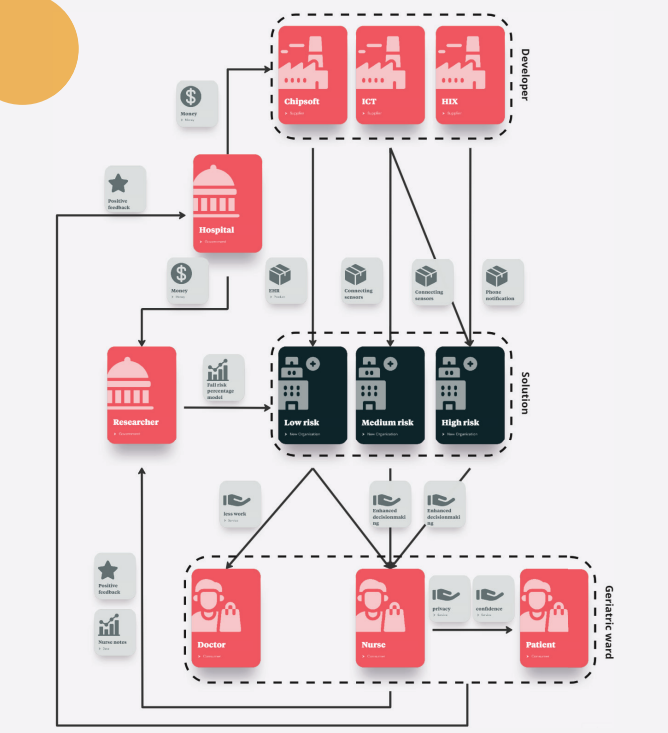
In Design Innovation Methods, I learned to use business templates, which have proven helpful in future projects. During my P2, we designed a game for the rehabilitation center Adelante, and the enthusiasm from therapists motivated me. Interested in strategic design, I took the Stakeholder Perspectives course to explore methods that consider the entire system, not just the user. The design case was particularly engaging; understanding the problem required a detective-like approach. Interacting with stakeholders highlighted the importance of diverse perspectives. Our project aimed to implement feasible solutions for the hospital community, which was very satisfying. Our fresh insights also provided valuable new perspectives to researchers deeply involved in the hospital’s dynamics.
In my FBP, I applied templates like the customer journey, onion map, and business model canvas from Design Innovation Methods. The Stakeholder Perspectives course taught me to approach stakeholders confidently. Through my FBP, I learned resilience; if some stakeholders are uninterested, it’s essential to find new ones.
Creativity and Aesthetics
Throughout each project, I utilized various ideation techniques, primarily brainstorming by themes or “How Might We” questions. I also employed methods like Crazy Eight, Reverse Thinking, and Extreme Users, often combining these approaches to suit specific design challenges.
Explorative Sketching helped me improve conveying my ideas, which I’ve applied in multiple projects since. In P2, I designed a clickable prototype for a motivational game, considering how different animation styles appeals to users. In Aesthetics of Interaction and exploratory making, I explored how the design of everyday objects like alarm clocks and beverage machines influences user experience. I iterated physically to enhance intuitiveness and interaction quality. Viewing aesthetics as more than visual appeal—emphasizing form and interaction. In Intercultural sensitivity, we researched the aesthetics of homes of older people in India to align our design with their preferences. Thereby learning to design aesthetics beyond personal taste. At ELISAVA, aesthetics were paramount. I learned to make not just products but also reports, presentations, and exhibitions aesthetically pleasing. During my FBP, I delved into the psychology of color and form to effectively convey messages in my designs, offering a new perspective on aesthetics.
Math, Data and Computing
Initially, I associated this expertise with calculus, physics, and data analytics, which were not the courses I particularly enjoyed. The most useful skill I learned from those courses was how to analyze and clean data with Python. I have also incorporated quantitative data into other projects at a basic level.
In the courses after, I generated my own data using an Arduino equipped with several sensors and devises like a MiBand fitness watch. I analyzed these datasets using programming languages like Python, SQL, R and SPSS. However, I never did this alone and had help from teammates. Additionally, I learned various evaluation methods for collecting and processing data.
During P3, I delved deeply into data visualization, exploring how differently processed raw data can be misleading or even addictive to users. This psychological aspect of data intrigued me more, as it examines how data presentation can empower or deceive users.
Technology and Realization
In my first year, I learned the basics of programming and electronics. I developed this skill further by creating devices with sensors in projects like Engineering Design and Making Sense of Sensors, as well as in my three semester-long courses. Although I was not always the lead electrician, I made an effort to understand all the work being done.
In the course “ID Green,” I learned about different materials and how to make sustainable choices in product assembly. During P1, I even created my own bio-based plastic to incorporate into our final design. At Elisava, I expanded my knowledge of materials, learning both how to process them myself and how it is done in the industry.
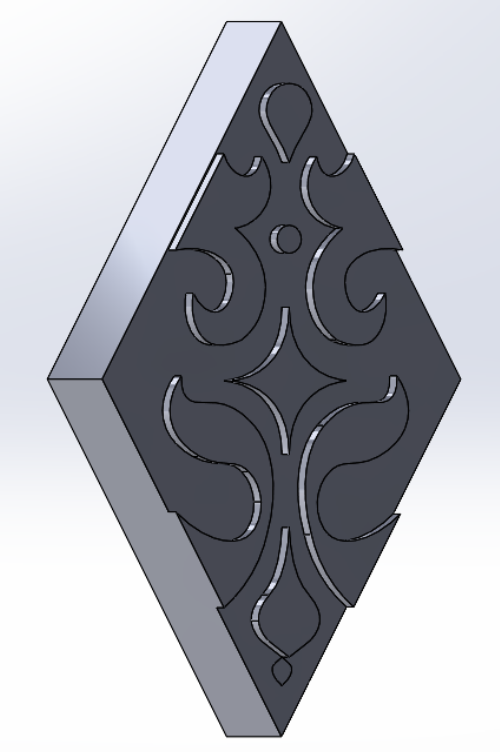
At Elisava, I also learned woodworking and metalworking, mastering various joints and culminating in the creation of a deckchair. I experimented with making different kinds of concrete and tested a new type of biodegradable material, eventually creating a product with it. Additionally, I learned to work with SolidWorks and created several 3D-printed components.
Although I enjoyed learning more about materials and making things at Elisava, as I felt I missed that in Eindhoven, I realized I missed the societal depth I had in my projects in Eindhoven. I discovered that I find this aspect more important than simply making aesthetically pleasing items. In “Exploratory Making” and “Aesthetics of Interaction,” I learned to create low and high fidelity prototypes with various mechanics. During my FBP, I delved into software development and UX design by creating websites on different platforms.
User and Society
In my first year, I learned the basics of user-centered design and how to open up to different cultures and subcultures. In all my semester long projects, I tended to focus on research in behavioral psychology. My first two and final bachelor projects were about making a tool to motivate a certain group, so I can say I have become an expert on motivation within the design context. My third project was about how people internalize the data they see, which is also linked to psychology.
The fact that all my projects revolved around behavior design is not a coincidence. When I took the course “ID Green,” I realized that there are already many solutions for sustainability issues, but most of them do not get implemented because they require behavior change from the users. This realization contributed to my slow shift from interest in materials and products to psychology and behavior design. I am still interested in this area and would like to pursue the minor “Well-being by Design: Behavioral Foundations and Public Policy” at the University of Utrecht.
I also chose several social electives where I learned how to approach design projects around cultures I am not familiar with, as it can be quite difficult to set aside my own cultural assumptions and values. I also learned about more-than-human-centered design, which broadened my perspective. I started thinking not just about my intentions but also about how my design can influence other elements and what it will mean to others in the future.
Design research process and professional skills
The first half of my bachelor’s program was more dedicated to learning the design process. During my studies, I learned to think creatively and handle long-term, open-ended projects. I believe this is one of the best assets industrial designers have—not just the ability to work with electronics or analyze large sets of data, but the capability to take on projects from start to finish and know which steps to take. While I am not an expert in any specific area yet, I have a good understanding of research, working with users, electronics, aesthetics, and integrating everything from a business perspective. I can explain the value and next steps needed for a project.
The second half of my bachelor’s program focused more on learning how to conduct design research. I learned the importance of conducting accurate research to create solutions that properly fit the problem. I gained experience in incorporating various methods into my processes. However, in the end, a design process is not just about knowing the methodologies; it’s about transforming those methods to achieve your goals and complete your projects successfully.
Throughout the design process, my analytical skills allow me to thoroughly assess problems and develop effective solutions. I manage stress well, ensuring I stay calm and focused even under tight deadlines. My politeness and empathy help me communicate effectively and build strong relationships with team members and stakeholders. Attention to detail ensures the precision and quality of my work, while open-mindedness enables me to consider diverse perspectives and innovative ideas. However, my biggest pitfall is time management, which I am continually working to improve.
Extracurricular Expertise
Photography
Graphic Design
Logo Design
Made on behalf of Popupop
Made on behalf of Tork
Made on behalf of Scouting Die Wiltgraeff
Furniture and household items